December 9, 2025

Erasmus+ KA2 Future Forward project | AI and adult learners in Europe: real data, gaps, and practical strategies to increase inclusion

The European Erasmus+ KA2 project “Future Forward – Empowering adult learners to use AI for everyday life and work” project, of which our German agency Berlink is a partner, aims to help adults and teachers understand and use AI in a practical, safe, and informed way.

Below is another article on the project.

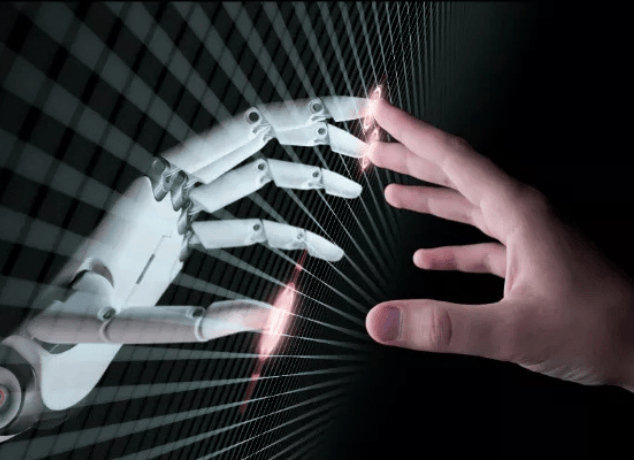
Artificial Intelligence is becoming part of everyday life in Europe- but not for everyone.

While younger generations and large companies adopt AI tools rapidly, a significant portion of adults still feel uncertain, excluded, or skeptical. Understanding where and why these gaps exist is the first step toward meaningful digital inclusion.

1) The Current Situation: What the Numbers Show

  • Digital Skills: Only 56% of European adults have basic digital competencies. This means that nearly one in two adults is not yet ready to use AI confidently.
    – AI at Work: In 2024, 13.5% of EU companies reported using AI—up from 8% in the previous year. Adoption, however, is much higher in large companies, while small businesses remain behind.
    – Personal Use: About 42–44% of adults in Europe use generative AI tools at least once a month—usually for everyday tasks such as translation, summarization, or email support.

Where Adoption Is Lower

Countries where adults use AI the least include:

Romania (32%), Italy (25%), Portugal (24%), France and Belgium (23%).

These differences reflect more than just technology access.

They relate to confidence, exposure, and digital culture.

2) Why Many Adults Still Avoid AI

It’s not just fear of technology. It’s a combination of:

BarrierWhat it Means in Practice
Low digital confidence“I’m afraid of doing something wrong.”
Lack of relatable examples“I don’t see how this helps me.”
Overly technical language“This is for experts, not people like me.”
Learning without guidance“I get lost when I try alone.”

Adults don’t need more technology — they need meaningful explanations and human support.

3) What Actually Works: Practical, Effective Approaches

a) Start from real needs, not tools. Show small, useful applications:

– Write a clear email faster
– Translate a document with one click
– Summarize long texts when overwhelmed

When adults see usefulness → motivation increases.

b) Keep the language simple

No “neural networks” or “predictive modeling.”

Just: “A tool that helps you make a task easier.”

c) Learn together, not alone

Group learning:
– Builds confidence
– Reduces anxiety
– Creates shared problem-solving

4) A More Human Approach to Digital Innovation

Helping adults use AI is not just about technology.

It is about:

– Autonomy
– Participation
– Dignity

These findings highlight how crucial it is to support adults in developing the skills needed to engage confidently with AI. In this sense, the work carried out within the Erasmus+ Future Forward project is timely and relevant: it focuses on practical training pathways and inclusive learning environments that empower adults rather than overwhelm them.

A future that includes everyone is a future worth building.

Keep following the project to check all the news and further contents in the website and social media channels (Facebook and LinkedIn).

Related Posts

News from the Erasmus+ KA2 DiTwin project: the platform for students and teachers is now online

August 29, 2025

August 29, 2025

For almost two years, our Irish agency, Training Vision, has been a partner in the European Erasmus+ KA2 DiTwin project,...

Erasmus+ KA2 “Playing 4 Soft Skills” project: gamification as a pedagogical approach

June 9, 2022

June 9, 2022

Why is non-formal education important? Everyday life and professional activity in the 21st century often require us flexibility, creativity and...

“Reintegrate Wellbeing”: Progress in Porto for Workplace Wellbeing

November 16, 2023

November 16, 2023

In the beautiful setting of Porto, on November 7th and 8th, 2023, the second Transnational Meeting of the “Reintegrate Wellbeing”...

The value of developing soft skills in students’ education

July 27, 2021

July 27, 2021

As the world is becoming more technological and conformist, the labour market is constantly looking for factors that can make...

Erasmus+ KA2 “Skills Act 4 VET” project: ready for the Multiplier Event

March 29, 2022

March 29, 2022

During the last Transnational Meeting held in Rome on the 28th of February and 1st of March, the SkillsAct4Vet consortium...

Reintegrate Wellbeing: an Erasmus+ project to prevent and “treat” burnout in the workplace

March 23, 2023

March 23, 2023

Life can be stressful, and stress can rapidly turn into burnout. If you’ve ever felt extreme mental and physical exhaustion...

Erasmus+ KA2 IPAL project: it’s time for the third Transnational Meeting.

November 23, 2021

November 23, 2021

On the 3rd and 4th of November, all the partners from Bulgaria, Germany, Italy, and Greece attended the third Transnational...

Erasmus+ KA2 “SkillsAct4Vet” project: the platform for the training of VET teachers is active

December 16, 2021

December 16, 2021

The SkillsAct4Vet project coordinated by Tribeka has entered an exciting phase now, after the Transnational Project Meeting held in Athens...

Erasmus + KA2: Mariassunta, my trip to Malaga for the third Transnational Meeting of the project “Playing 4 soft Skills

October 25, 2021

October 25, 2021

2020 was a year of change for everybody: we learned to appreciate and take advantage of the opportunities offered by...

Erasmus+ KA2 IPAL project: what are the 3 Intellectual Outputs

February 22, 2022

February 22, 2022

IPAL, an international Erasmus+ KA2 project with the desire and vision to improve the current situation in adult education and...

Erasmus+ KA2 StarWomen project: final preparations for the Closing Conference

September 15, 2025

September 15, 2025

In recent days, an online meeting was held among the partners of the European Erasmus+ KA2 “StarWomen –Simulation Training for...

One year of P.iR.A.M.iD

January 29, 2025

January 29, 2025

The P.iR.A.M.iD project (Path for Intercultural Awareness, Measurement and Development) aims to structure the intercultural competencies of VET students and teachers in the tourism...

Erasmus+ KA2 “Skills Act 4 VET” project: the power of dissemination

March 7, 2022

March 7, 2022

At the same moment in which the transnational mobility activities, which were so lacking in pupils and teachers, have regained...

Partner Meeting at Tribeka Training Lab: Advancing AI in Apprenticeship Mentoring

December 9, 2024

December 9, 2024

Tribeka training lab recently kicked off, as partner, a new ErasmusPlus KA220Vet Project with title: ’AI in Apprenticeship Mentoring’ (project Number:2024-1-BG01-KA220-VET-000247196...

Erasmus+ KA2 IPAL project: promote and develop adult training and education

December 17, 2021

December 17, 2021

Briefly about IPAL The IPAL project is a joint initiative of 5 organizations from Spain, Bulgaria, Italy, Greece and Germany...

Comments
Leave a Reply

Your email address will not be published. Required fields are marked *

Newsletter