January 2, 2026

Culture, Communication and Hospitality: The P.iR.A.M.iD Project Trains European Teachers in Málaga

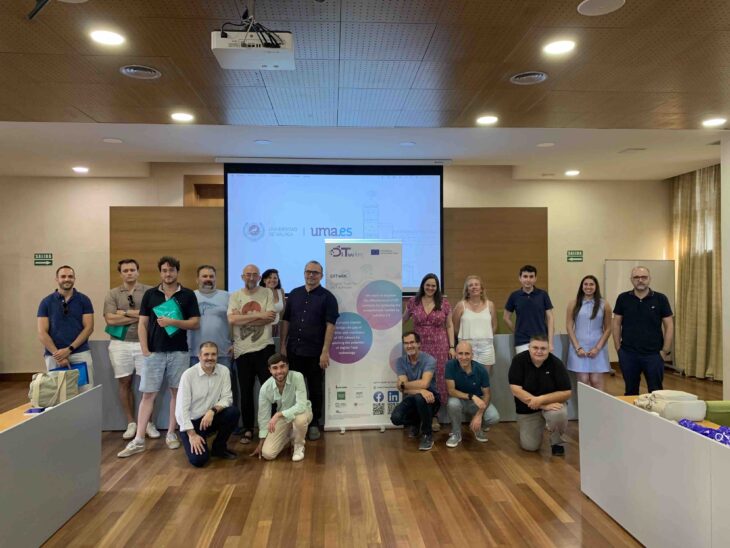
From May 26 to 30, 2025, a group of teachers from Italy, Belgium, Bulgaria, and Spain gathered in vibrant Málaga for an international training event as part of the P.iR.A.M.iD project. The aim: to enhance intercultural competences in the fields of tourism and hospitality, using innovative, hands-on tools and methods that can be directly applied in both education and the workplace.

The first day of training focused on the Lewis Model, a powerful theoretical framework for understanding how national culture influences communication styles, decision-making, and work behaviour. Through practical exercises and guided discussions, participants learned to recognize and interpret cultural patterns—an essential skill in today’s global and multicultural hospitality industry.

“Knowing your guest’s cultural background is no longer a bonus,” one trainer explained. “It’s a core skill for providing respectful and personalized experiences.”

Day two was dedicated to intercultural communication, a vital topic for anyone working in tourism. Tone of voice, body language, gestures, or even silence can have vastly different meanings across cultures.

Through real-world simulations and case studies, participants developed strategies to adapt their communication styles, improve service quality, prevent misunderstandings, and build stronger connections with international guests.

As emphasized in the training: “Tourism is global. Communication should be too.”

The third day explored the importance of religious and cultural awareness in hospitality. From offering halal or kosher food and providing prayer spaces to understanding modesty norms and religious holidays, small adjustments can lead to a more inclusive and respectful experience.

This session equipped educators with the tools to teach future professionals how to deliver service that not only meets needs but honours identities—a new gold standard for the hospitality sector.

Thanks to the support of the Erasmus+ programme, P.iR.A.M.iD empowers teachers to return to their institutions with a broader vision, practical knowledge, and shareable best practices. It’s another step forward in building a more open, intercultural, and professionally relevant European education.

Related Posts

Erasmus+ KA2: “Skills Act 4 VET” with wind in its sails

January 24, 2022

January 24, 2022

The “Skills Act 4 VET” project is gaining momentum for its last phase of development. With many goals successfully achieved...

P.iR.A.M.i.D. Project: Survey Insights and Theoretical Model

December 10, 2024

December 10, 2024

The first result of the ErasmusPlus KA220 Cooperation Project PiR.A.M.iD (Path for Intercultural Awareness, Measurement and Development) coordinated by Tribeka...

Bulgarian Students in Berlin Boost their Skills Digitally through Innovative Educational Project

June 5, 2023

June 5, 2023

13 students from the Vocational school of transport “Prof. Tsvetan Lazarov” in Pleven, Bulgaria have become a shining example of...

ITT “E. Fermi” in Francavilla Fontana visits the Rhodes Town Hall. The “Rodiaki” article

July 11, 2025

July 11, 2025

The ITT “E. Fermi” in Francavilla Fontana carried out an Erasmus+ KA122 project in Rhodes with our Greek agency, Aristos....

Brexit: today is the day

January 31, 2020

January 31, 2020

This evening at midnight (Italian time) the United Kingdom’s withdrawal from the Union will take effect, an agreement approved yesterday by the European Parliament...

Erasmus + KA2: Mariassunta, my trip to Malaga for the third Transnational Meeting of the project “Playing 4 soft Skills

October 25, 2021

October 25, 2021

2020 was a year of change for everybody: we learned to appreciate and take advantage of the opportunities offered by...

Stimulating learning mobility: the European Commission opens a public consultation

February 22, 2023

February 22, 2023

Despite the strong efforts of the EU and its Member States to promote and incentivize learning mobility among students, educators and staff,...

Reintegrate Wellbeing: an Erasmus+ project to prevent and “treat” burnout in the workplace

March 23, 2023

March 23, 2023

Life can be stressful, and stress can rapidly turn into burnout. If you’ve ever felt extreme mental and physical exhaustion...

In Potenza the Italian Multiplier Event of the Erasmus+ KA2 VET “Vir2TEX” project

April 19, 2023

April 19, 2023

Meeting students and teachers is always a fantastic emotion that turns into a beautiful experience and many great memories that...

The European Project Design glossary|Part II

November 18, 2019

November 18, 2019

Today we continue our discovery of the most used terms in the field of European Project Design. They are fundamental...

The hearts of ETN are with with all the people of Turkey and Syria

February 7, 2023

February 7, 2023

This morning, February 7 2023, around 10 a.m., a 30-year-old young woman, Hulya, and her six-month-old baby, Ayse, were rescued...

European project design: 3 main tools to write a successful project

October 22, 2019

October 22, 2019

Organizing focusing on ideas to achieve the set goals are the main steps to develop good design skills, fundamental to...

“Reintegrate Wellbeing”: Progress in Porto for Workplace Wellbeing

November 16, 2023

November 16, 2023

In the beautiful setting of Porto, on November 7th and 8th, 2023, the second Transnational Meeting of the “Reintegrate Wellbeing”...

Francesca and her Erasmus+ internship at Berlink

August 5, 2022

August 5, 2022

Hi, I’m Francesca, I’m 16 years old and I attend the ENGIM Turazza school, address graphic design in Treviso. I...

Erasmus+ KA2 “Skills Act 4 VET” project: the power of dissemination

March 7, 2022

March 7, 2022

At the same moment in which the transnational mobility activities, which were so lacking in pupils and teachers, have regained...

Comments
Leave a Reply

Your email address will not be published. Required fields are marked *

Newsletter