July 29, 2026

Culture, Communication and Hospitality: The P.iR.A.M.iD Project Trains European Teachers in Málaga

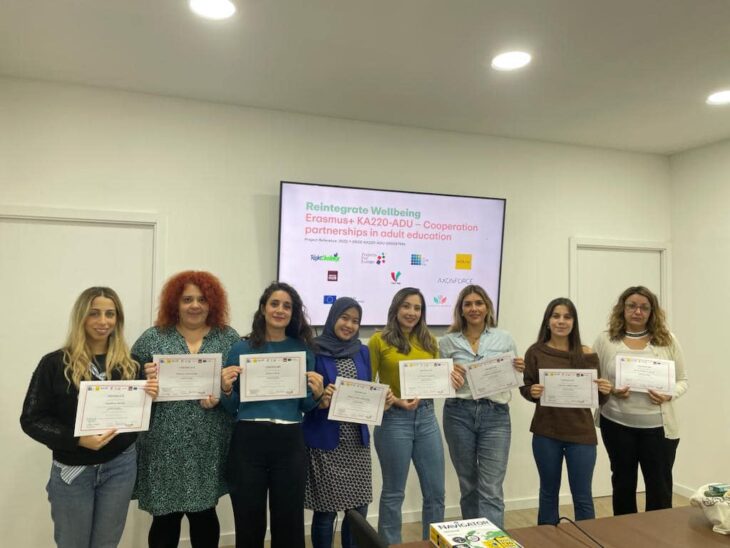
From May 26 to 30, 2025, a group of teachers from Italy, Belgium, Bulgaria, and Spain gathered in vibrant Málaga for an international training event as part of the P.iR.A.M.iD project. The aim: to enhance intercultural competences in the fields of tourism and hospitality, using innovative, hands-on tools and methods that can be directly applied in both education and the workplace.

The first day of training focused on the Lewis Model, a powerful theoretical framework for understanding how national culture influences communication styles, decision-making, and work behaviour. Through practical exercises and guided discussions, participants learned to recognize and interpret cultural patterns—an essential skill in today’s global and multicultural hospitality industry.

“Knowing your guest’s cultural background is no longer a bonus,” one trainer explained. “It’s a core skill for providing respectful and personalized experiences.”

Day two was dedicated to intercultural communication, a vital topic for anyone working in tourism. Tone of voice, body language, gestures, or even silence can have vastly different meanings across cultures.

Through real-world simulations and case studies, participants developed strategies to adapt their communication styles, improve service quality, prevent misunderstandings, and build stronger connections with international guests.

As emphasized in the training: “Tourism is global. Communication should be too.”

The third day explored the importance of religious and cultural awareness in hospitality. From offering halal or kosher food and providing prayer spaces to understanding modesty norms and religious holidays, small adjustments can lead to a more inclusive and respectful experience.

This session equipped educators with the tools to teach future professionals how to deliver service that not only meets needs but honours identities—a new gold standard for the hospitality sector.

Thanks to the support of the Erasmus+ programme, P.iR.A.M.iD empowers teachers to return to their institutions with a broader vision, practical knowledge, and shareable best practices. It’s another step forward in building a more open, intercultural, and professionally relevant European education.

Related Posts

Erasmus+: the structured course for Bulgarian teachers on Google Workspace for Education and Interactive Teaching has just ended

July 28, 2022

July 28, 2022

Learning and enhancing the use of innovative teaching methods: this was the key objective of the European Erasmus+ KA1 project...

European Project Design: how school can put into practice the Europe 2020 strategy through Erasmus+

December 2, 2019

December 2, 2019

Europe 2020 is a ten-year strategy proposed by the European Commission in 2010: the European Union has set ambitious goals...

Job Shadowing in Rimini: an indelible experience for some Polish teachers at the Scuola Maestre Pie

March 27, 2023

March 27, 2023

Last week our agency in Rimini “Sistema Turismo” hosted a group of four teachers from Poland within the Erasmus+ program...

Erasmus+ KA2 IPAL project: it’s time for the third Transnational Meeting.

November 23, 2021

November 23, 2021

On the 3rd and 4th of November, all the partners from Bulgaria, Germany, Italy, and Greece attended the third Transnational...

Erasmus+ KA2 Mob4app project: the Berlink team and the Final Meeting in Madrid

September 15, 2022

September 15, 2022

As part of the Final Transnational Project Meeting, we as representatives of the Berlink team travelled to Madrid to meet...

Brexit: today is the day

January 31, 2020

January 31, 2020

This evening at midnight (Italian time) the United Kingdom’s withdrawal from the Union will take effect, an agreement approved yesterday by the European Parliament...

Erasmus+ KA2 “Skills Act 4 VET” project: the power of dissemination

March 7, 2022

March 7, 2022

At the same moment in which the transnational mobility activities, which were so lacking in pupils and teachers, have regained...

ETN World Tour 2019: ETN meets Bulgarian schools in Sofia for Contact Seminar on international mobility

November 20, 2019

November 20, 2019

Yesterday 19th of November the ETN World Tour was in Sofia in order to meet all the Bulgarian schools and...

The DiTwin project: a digital future for VET Schools

August 8, 2024

August 8, 2024

Since last October, our Irish agency, Training Vision, has been part of an exciting project that aims to revolutionize vocational...

WISE: the Italian Transnational Meeting of the Erasmus+ KA2 project

February 25, 2022

February 25, 2022

Few days ago the Italian Transnational Meeting of the Erasmus Plus KA2 project “WISE – Woman, Innovative, Successful, Empowered” was...

“Reintegrate Wellbeing”: Progress in Porto for Workplace Wellbeing

November 16, 2023

November 16, 2023

In the beautiful setting of Porto, on November 7th and 8th, 2023, the second Transnational Meeting of the “Reintegrate Wellbeing”...

Erasmus call 2021-2027: latest news

April 2, 2021

April 2, 2021

The European Commission has launched a new Erasmus call 2021-2027, inviting all private and public bodies active in the field...

Francesca and her Erasmus+ internship at Berlink

August 5, 2022

August 5, 2022

Hi, I’m Francesca, I’m 16 years old and I attend the ENGIM Turazza school, address graphic design in Treviso. I...

The Stendhal Syndrome was first described during an Erasmus … ops, Gran Tour!

January 28, 2020

January 28, 2020

Have you ever experienced, in front of a particularly evocative work of art, a strong feeling of fainting, followed by...

Cultural awareness: internationalizing the school with Erasmus+

November 10, 2021

November 10, 2021

What is cultural awareness One of the key competences of lifelong learning – cultural awareness and expression – includes the...

Comments
Leave a Reply

Your email address will not be published. Required fields are marked *

Newsletter