January 30, 2026

Not only Montecchi and Capuleti: an Erasmus+ in Rimini to get to know the Malatesta and Montefeltro families and their rivalry

Everybody knows the famous rivalry between the Montague and Capulet families or, if you will, between Romeo and Juliet.

It’s the plot of one of the most famous tragedies in the world composed by William Shakespeare between 1594 and 1596; in Rimini, on the other hand, in the 400s there was a long rivalry between two other noble families: the Malatesta, lords of Rimini and Fano, and the Montefeltro, dukes of Urbino.

But let’s see what happened: Sigismondo Pandolfo Malatesta, born in Brescia in 1417, was an enlightened, educated, passionate but also unscrupulous and strong man, as well as a very skilled strategist with precocious military aptitudes.

Orphaned as a child, he moved with his two brothers to Rimini under the protective wing of his uncle Charles, who, lacking heirs, included them in his court and obtained their legitimacy to power. He was the most important leader of Romagna in the Renaissance era and the last true powerhouse of the Malatesta family: led by Sigismondo, Rimini became a refined court and a prestigious cultural center.

Federico da Montefeltro, on the other hand, became lord of Urbino at the age of 22 in 1444 and ruled his lands until his death in 1482.  Federico also had a very strong aptitude for war and was a cultured and enlightened man, who made the court of Urbino an environment of European renown by hosting the greatest intellectuals of the time.

The main area of confrontation between the two leaders consisted of the territories of what is now lower Romagna and Marche, which Sigismondo did not want to give up. For about twenty years they fought each other between battles, truces and duels until in 1463 Federico, with the support of Pope Pius II who had always been opposed to the Malatesta, succeeded in defeating his historical rival, who lost all his dominions, retaining only Rimini until his death in 1468.

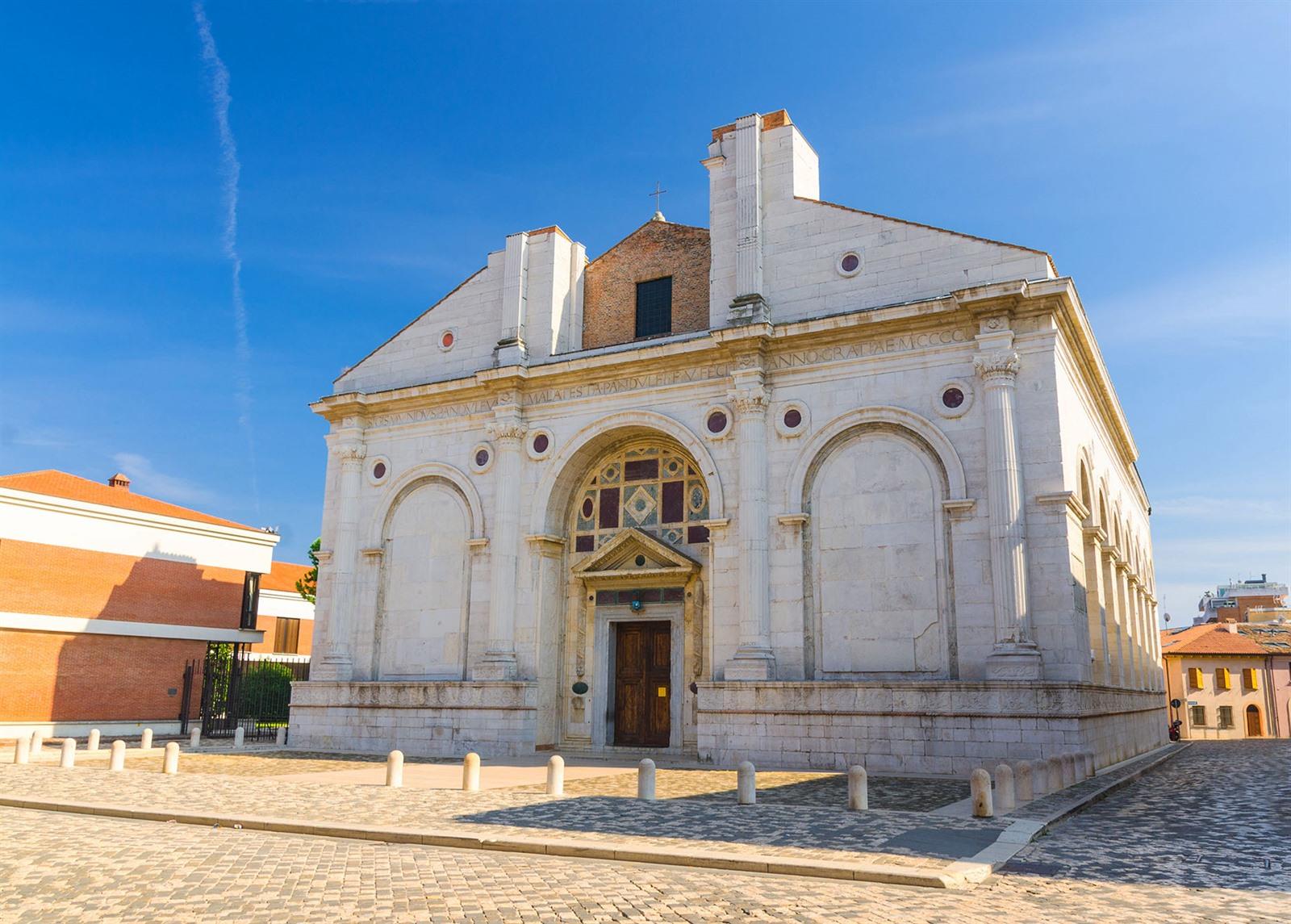
To follow in his footsteps and discover the legacy Sigismondo left in Rimini, we can visit both Castel Sismondo and the Malatesta Temple.

Works on Castel Sismondo, also called Rocca malatestiana, begun in 1437 and were completed in 1446; it was designed and conceived by Sigismondo himself: surrounded by a moat with the towers facing the city for defensive purposes, a symbol of the power of the Seignory, as well as a dwelling it was conceived as a fortress to represent the power and supremacy of the Malatesta family.

The Malatesta Temple, on the other hand, today also called Rimini Cathedral, was begun in 1447 and conceived as a triumphal temple to celebrate the Malatesta family, who chose it as their burial chapel.

The temple was never completed due to their decline, but inside you can admire two priceless masterpieces: a fresco by Piero della Francesca and the painting Crucifix of Rimini, created by Giotto in the 300s.

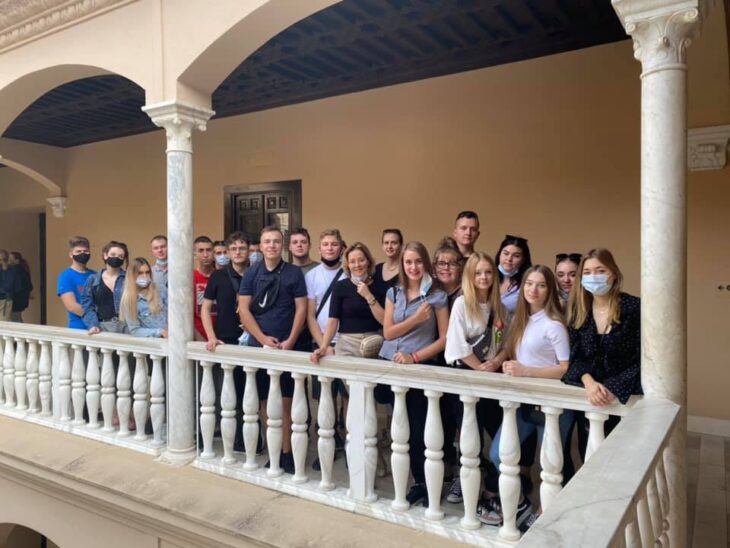
These are therefore two must-visit stops for those in Rimini like the many teachers and students from all over Europe that our Sistema Turismo agency, with 30 years’ experience, is really happy to welcome during their Erasmus+ work placement.

Written by Anna Carla Ronchi

Related Posts

When there is Europe

May 9, 2022

May 9, 2022

When there is Europe, there is the free movement of people in all the countries that are part of it:...

Erasmus+ KA2: “Skills Act 4 VET” with wind in its sails

January 24, 2022

January 24, 2022

The “Skills Act 4 VET” project is gaining momentum for its last phase of development. With many goals successfully achieved...

Bulgarian school “Atanas Tsonev Burov” awarded for its Erasmus+ project on energy efficiency

December 17, 2024

December 17, 2024

Our partner, the Vocational School of Industrial Technologies “Atanas Tsonev Burov”, located in Ruse, Bulgaria, has been awarded a Quality...

Erasmus+ KA2 P4SS project: Soft Skills Training App, the platform to develop the soft skills in a playful manner

August 29, 2022

August 29, 2022

Nowadays, guys spend their time on their smartphones on a daily basis, so the possibility to develop a digital app...

The Burnout Experience: impressions from the Reintegrate Wellbeing’s Mini Job Fair

August 8, 2024

August 8, 2024

On June 28th and 29th, the Uber Eats Music Hall in Berlin became a hub of opportunity and empowerment during...

P.IR.A.M.iD: the project for the development of intercultural skills in the tourism sector

August 9, 2024

August 9, 2024

The P.IR.A.M.iD. project (Path for Intercultural Awareness, Measurement and Development) was promoted thanks to the ErasmusPlus programme with the aim...

Erasmus+ in Malaga to discover the biznagueros and the Arab heritage of Spain

June 30, 2022

June 30, 2022

Walking through the wide streets of downtown Malaga, we cannot fail to notice men dressed in white shirts, black pants...

Stimulating learning mobility: the European Commission opens a public consultation

February 22, 2023

February 22, 2023

Despite the strong efforts of the EU and its Member States to promote and incentivize learning mobility among students, educators and staff,...

Erasmus+: a survey states that experiences abroad increase the acquisition of soft skills

June 29, 2022

June 29, 2022

In 2014, the European Commission published the Erasmus Impact Study, a study carried out by experts in which it states...

An Amarcord and a piadina passing under the Arch of Augustus: when Erasmus+ in Rimini turns into a movie

June 10, 2022

June 10, 2022

According to popular opinion, the city of Rimini evokes many things: sea and sun, fun, sport, food and culture, the...

P.iR.A.M.i.D. Project: Survey Insights and Theoretical Model

December 10, 2024

December 10, 2024

The first result of the ErasmusPlus KA220 Cooperation Project PiR.A.M.iD (Path for Intercultural Awareness, Measurement and Development) coordinated by Tribeka...

Students will learn lessons with VR technology

July 26, 2023

July 26, 2023

“Digital Education Materials for Sustainable Textile Education (Vir2TEX)” Erasmus Plus project held the final meeting Ege students will learn lessons...

WISE: the Italian Transnational Meeting of the Erasmus+ KA2 project

February 25, 2022

February 25, 2022

Few days ago the Italian Transnational Meeting of the Erasmus Plus KA2 project “WISE – Woman, Innovative, Successful, Empowered” was...

Erasmus+: good practices for developing the eight soft skills identified by the European Union

July 13, 2022

July 13, 2022

The European Union’s identification of the eight European key competencies – soft skills – (also called key citizenship competencies) is...

The Soft Skills Tree – Game Manual: the second output of the Playing 4 Soft Skills project is online

June 16, 2022

June 16, 2022

The second output of the “Playing 4 Soft Skills” project is online! This is the “Soft Skills Tree – Game...

Comments
Leave a Reply

Your email address will not be published. Required fields are marked *

Newsletter