March 25, 2026

The DiTwin project: a digital future for VET Schools

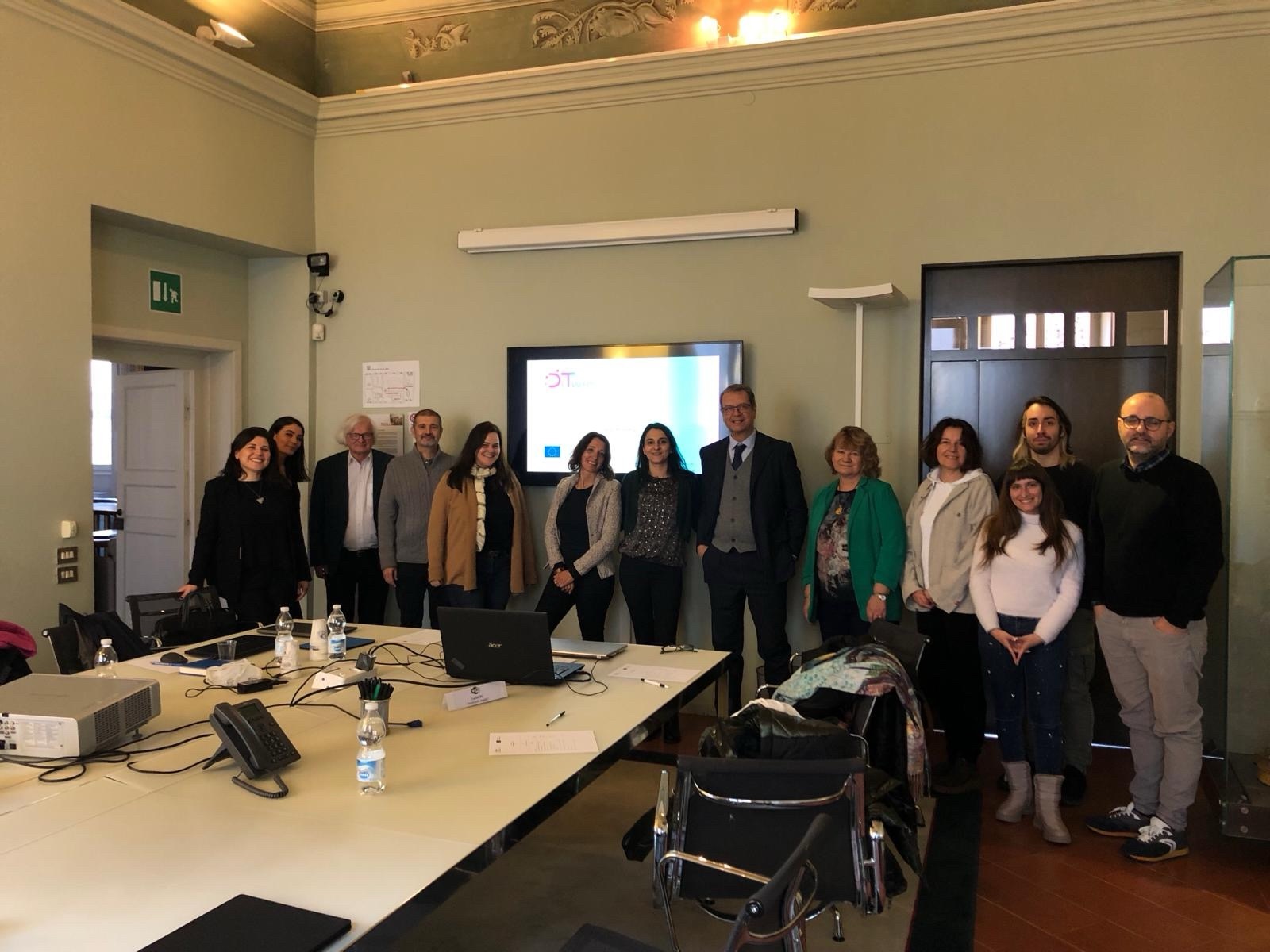
Since last October, our Irish agency, Training Vision, has been part of an exciting project that aims to revolutionize vocational education and training through the innovative use of Digital Twin technology.

The DiTwin project – Digital Twin for VET Schools – is a two-year cooperation partnership in the field of vocational education and training, funded by the Erasmus+ Program (KA220-VET).

The project involves leading institutions from Italy, Spain, Ireland, Greece, and Poland, working together to innovate school curricula in response to the needs of Industry 4.0.

Project Objectives

The main objective of DiTwin is to enhance the effectiveness of vocational education and training (VET) school curricula to develop the skills required by Industry 4.0. 

The project aims to bridge the gap between the equipment and infrastructure of VET schools and the needs of the labor market by leveraging the potential of Digital Twin technology.

This technology enables work-based learning activities that are closely aligned with the latest developments in the manufacturing industry, thereby supporting the adaptation of VET curricula and training offerings to the real needs of required skills. 

Additionally, the project seeks to improve the digital skills of VET teachers to support the implementation of digital twin-based activities and the acquisition of the digital skills demanded by Industry 4.0.

Achieved Results

One of the main results achieved so far is the creation of the Competence Framework. 

This framework outlines 11 professional profiles required by Industry 4.0 in the partner countries, categorized in terms of knowledge, skills, and competences. 

The profiles are designed using a learning outcomes-based language that is easily understood across Europe and aligned with the standard curricula of VET schools in the partner countries, thus facilitating their integration into school practices. 

The defined profiles include crucial roles such as Additive Manufacturing Technician, CAD/CAM Designer, Automation Technician for Industry 4.0, and Robotic Machine Technician for Industry 4.0. 

These profiles represent key roles in the Industry 4.0 environment, each with specific skill and knowledge requirements.

After mapping the profiles based on the technical and pedagogical potential of Digital Twin, the partners identified three different profiles required by Industry 4.0.

Next Steps

Currently, the partners are developing Digital Twin-based training modules aimed at VET schools to achieve the learning objectives of the identified profiles. Among the upcoming steps is the creation of the Digital Twin Platform, which will allow students to access the DiTwin modules.

During the project’s second meeting, which will take place in Krakow from November 14 to 15, 2024, at the University of the National Commission of Education (UKEN), the partners will present the initial results of DiTwin and plan new activities, directly involving stakeholders in the project.

To stay updated on the developments of the DiTwin project, you can follow the official website and dedicated social media channels, where news and regular updates will be published (Facebook and Linkedin).

Related Posts

Equality and inclusiveness: how Erasmus+ promotes equal access to all its actions

June 20, 2022

June 20, 2022

“The whole purpose of education is to turn mirrors into windows.” (Sydney J. Harris) Equality and inclusiveness are part of...

Pessoa Academy: in Lisbon the new ETN agency for Erasmus+ projects

January 23, 2023

January 23, 2023

Lisbon: capital of Portugal and one of the most beautiful cities in Europe. Here the vast, irregular and multicolored set...

An amazing week in Malaga, a city full of art, music and joy of life

November 14, 2019

November 14, 2019

Once upon a time … the way I should start this article. An amazing week with 6 teachers from Tartu...

Erasmus+: a survey states that experiences abroad increase the acquisition of soft skills

June 29, 2022

June 29, 2022

In 2014, the European Commission published the Erasmus Impact Study, a study carried out by experts in which it states...

Stimulating learning mobility: the European Commission opens a public consultation

February 22, 2023

February 22, 2023

Despite the strong efforts of the EU and its Member States to promote and incentivize learning mobility among students, educators and staff,...

Erasmus+: give priority to green skills and the promotion of sustainable development

June 8, 2022

June 8, 2022

In one of the articles on Erasmus+ we answered six questions by touching on the most important aspects. Now, speaking...

Bulgarian school “Atanas Tsonev Burov” awarded for its Erasmus+ project on energy efficiency

December 17, 2024

December 17, 2024

Our partner, the Vocational School of Industrial Technologies “Atanas Tsonev Burov”, located in Ruse, Bulgaria, has been awarded a Quality...

Culture, Communication and Hospitality: The P.iR.A.M.iD Project Trains European Teachers in Málaga

June 6, 2025

June 6, 2025

From May 26 to 30, 2025, a group of teachers from Italy, Belgium, Bulgaria, and Spain gathered in vibrant Málaga...

Erasmus+ KA2: “Skills Act 4 VET” with wind in its sails

January 24, 2022

January 24, 2022

The “Skills Act 4 VET” project is gaining momentum for its last phase of development. With many goals successfully achieved...

Bulgarian Students in Berlin Boost their Skills Digitally through Innovative Educational Project

June 5, 2023

June 5, 2023

13 students from the Vocational school of transport “Prof. Tsvetan Lazarov” in Pleven, Bulgaria have become a shining example of...

Erasmus+ 2022 call has just been published: 3.9 billion euros for mobility and cooperation

November 25, 2021

November 25, 2021

Today, the European Commission launched the calls for proposals under Erasmus+ call for 2022, following the adoption of the 2022 annual...

Erasmus+ KA2 “Playing 4 Soft Skills” project: gamification as a pedagogical approach

June 9, 2022

June 9, 2022

Why is non-formal education important? Everyday life and professional activity in the 21st century often require us flexibility, creativity and...

Erasmus+ KA2 ManageMob project: innovation in international mobility enters testing phase

September 9, 2025

September 9, 2025

The landscape of Erasmus+ projects is constantly being enriched by innovative initiatives, and the KA2 ManageMob project is a perfect...

P.iR.A.M.i.D. Project: Survey Insights and Theoretical Model

December 10, 2024

December 10, 2024

The first result of the ErasmusPlus KA220 Cooperation Project PiR.A.M.iD (Path for Intercultural Awareness, Measurement and Development) coordinated by Tribeka...

One year of P.iR.A.M.iD

January 29, 2025

January 29, 2025

The P.iR.A.M.iD project (Path for Intercultural Awareness, Measurement and Development) aims to structure the intercultural competencies of VET students and teachers in the tourism...

Comments
Leave a Reply

Your email address will not be published. Required fields are marked *

Newsletter