We arrived in Rimini on April 16. The first days were spent to getting familiar with this new reality. Everything was strange – the hotel wasn’t what we expected and the meals were different from what we’re used to in Poland. Before our first meeting with our Italian employers some of us were a bit nervous. We wondered how we would communicate and what tasks we would be given. However, after a few days, it turned out that some of our classmates had already explored the entire city by bus and discovered various interesting places, often unknown to tourists.
On Monday, the first day of our stay, our tutor Ms. Karolina organized a short walk through the historic center of Rimini. We visited Tampio Malatestiano, the cathedral named after the ruler of the city in the 15th century, Sigismondo Pandolfo Malatesta, the Arch of Augustus, and the Domus del Chirurgo – Rimini’s historical landmarks from the beginning of our era and the Renaissance.
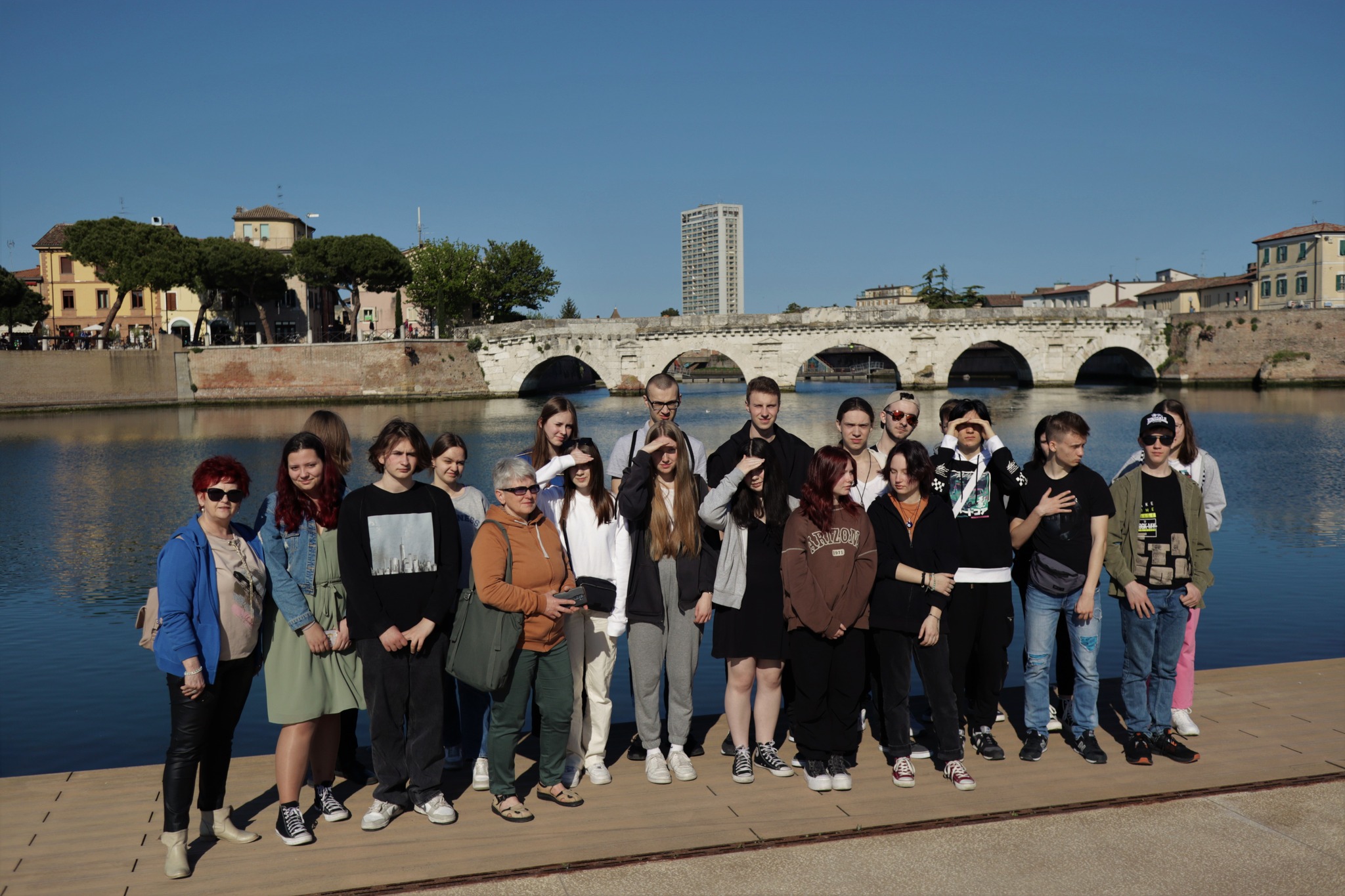
On Thursday, we took a walk across the Tiberius Bridge and explored San Giuliano – the historic fishing district that dates back to the 11th century. Nowadays, it is one of the city’s major tourist attractions. We were charmed by the murals and by the cafes. Walking along the marina we reached the pier, where we rested and admired the beauty of the Adriatic Sea.
Some of us visited the cemetery in Rimini, where the famous director Federico Fellini, who was born in Rimini, and his equally famous wife, actress Giulietta Masina, are buried.
The place is very different from our cemeteries, with the size of the tombs indicating the enormous importance of family ties for Italians and the need to remember their deceased loved ones. We were even more amazed by the “blocks” of urns or coffins.
On April 23 we visited San Marino. The day before, our friends gave us basic information about San Marino, its history, and modern times. While visiting the old city, we looked for places that Hubert and Piotr talked about, as well as discovering new ones. We were amazed by the topography of this city built on a rock, we admired buildings, monuments, and some even reached the La Rocca o Guaita fortress and visited this building from the 11th century. We took some pictures on the steps of the Basilica. We also went to the Palazzo Pubblico. Here, we were particularly impressed by the parliament hall, where the walls are adorned with beautiful wall paintings. The hall is used for sessions of the authorities, and when they are not in session, tourists can visit the hall. San Marino combines its beautiful history with modernity. There are many contemporary sculptures and monuments in the city commemorating important and tragic events, such as those from World War II or the tragedy of the children from Beslan. One of the contemporary attractions on the day of our trip was the Steam Party 2023 event and a Lego exhibition.
April 25 in Italy is the Day of Liberation, which commemorates the liberation of Italy from fascism in 1945. On this day, national ceremonies are held to pay tribute to people who fought against fascism.
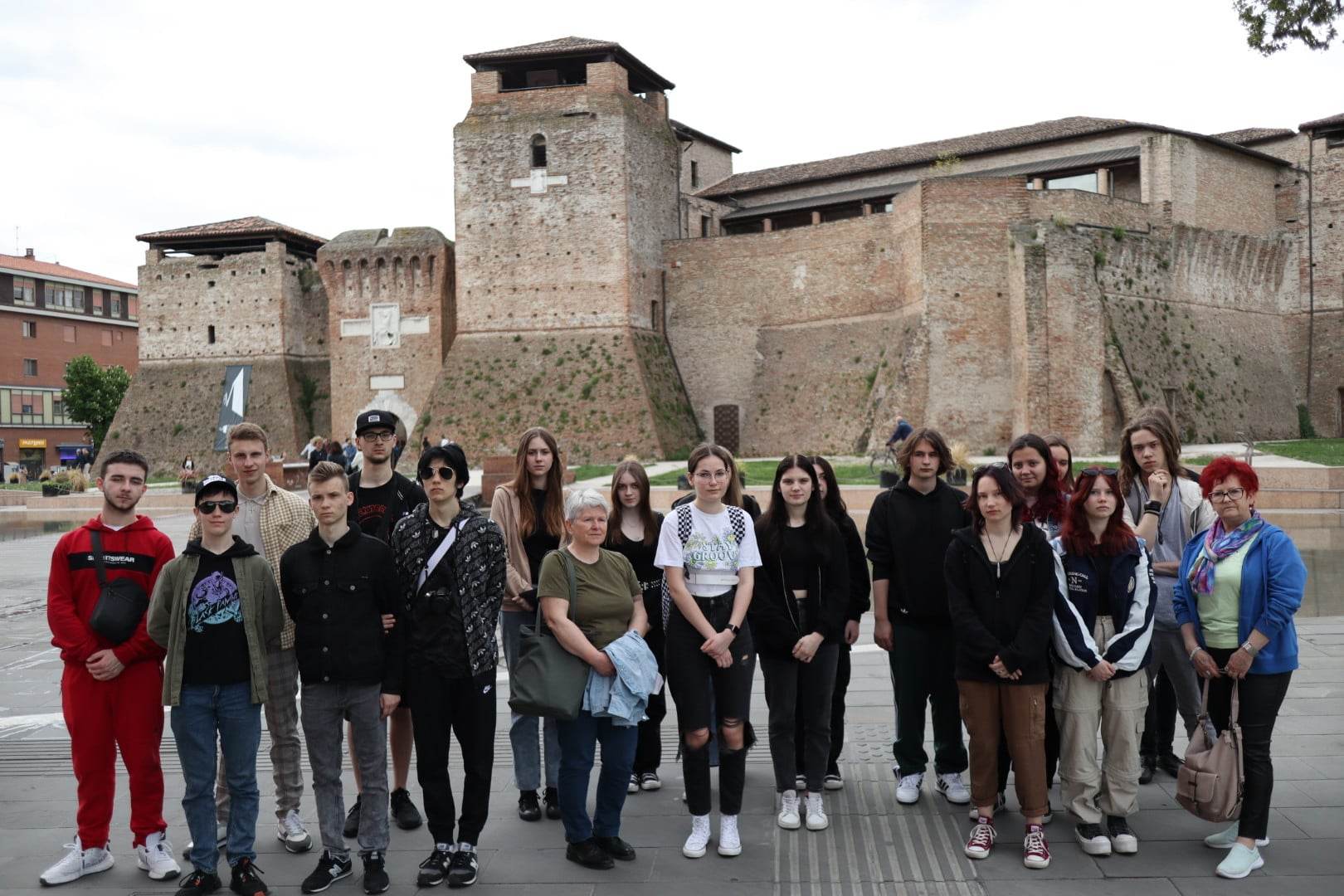
On this day, we went to the Three Martyrs Square and Cavour Square to celebrate with the residents of Rimini the anniversary of liberation. In the afternoon, we went to Castello Sismondo, to the F. Fellini Museum. In the museum, you can live the atmosphere of Fellini’s films and enter the world of imagination of this exceptional artist. Souvenirs related to the director can also be found in the Fulgor cinema, where young Fellini watched his first movie. We also visited this place and walked through the Plaza of Dreams – the space between the castle and the cinema. We thanked for the interesting experiences by signing the guest book.
This week, after work, some people went to the small, quiet town of Santarcangelo. Located on a hill, whose narrow streets, historic church, and little houses lets you experience the atmosphere of an Italian town. Wisteria vines and blooming roses climb the houses. While strolling, we reached the Church of St. Archangel, where we found a painting by the Santarcangelo-born artist Guido Cagnacci, and a chapel with the remains of the blessed Simone. In the historical museum, we learned about excavations from Roman times that were made in the vicinity of Rimini, burial customs during that era, as well as sacred painting and sculpture. However, the most surprising thing turned out to be the Button Museum. Among many beautiful and well-known buttons, we also found those related to our history and lands. Unfortunately, we only saw the outside of the castle (Castello Malatestiano), but we were amazed by the mural “Utopia” by Ericailcane, and the Ganganelli Arch on the main square impressed us. We recommend that everyone discovers this picturesque town.
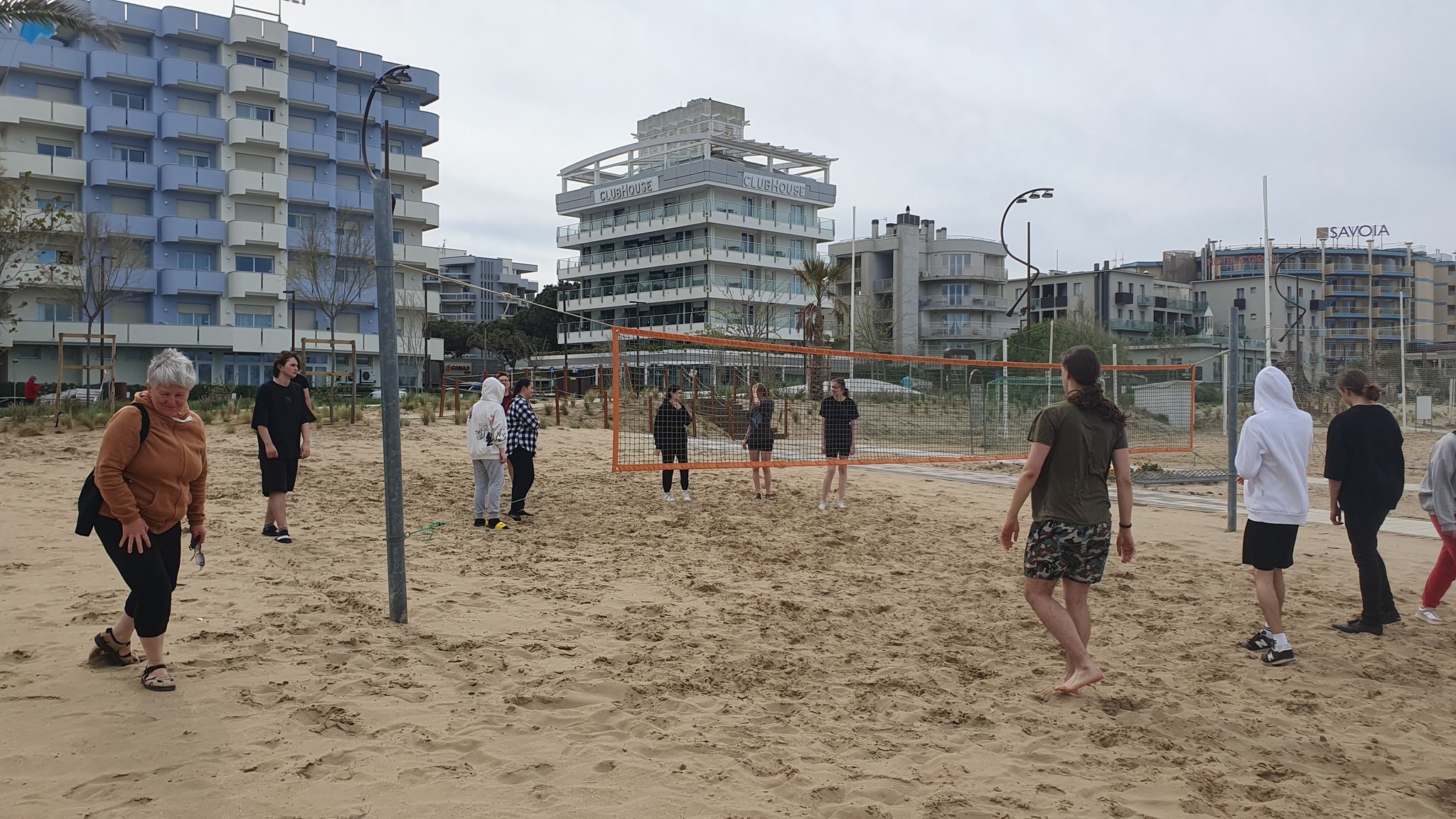
We spent Thursday afternoon by the sea. It was still quite windy, but being outside is good for your health, so we played volleyball and other games. There was a lot of fun and laughter.
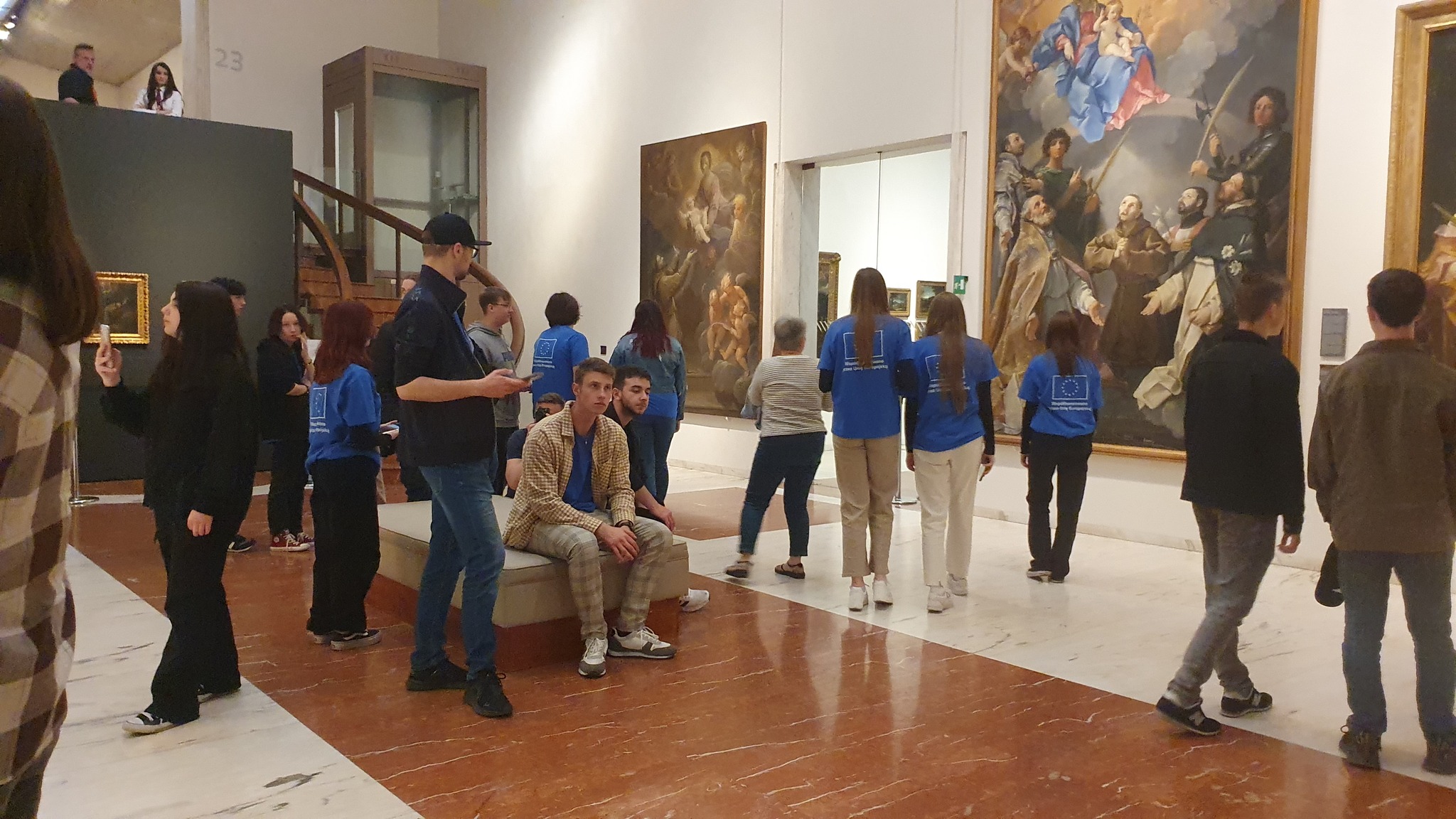
On Saturday, we took a train to Bologna. It’s a big academic center and a lively city. We toured it with our guides: Gabrysia, Jola, and Mariusz, who prepared the tour route. We visited the Pinacoteca, with Giotto’s polyptych and Raphael’s painting. At the Museo di Palazzio Poggi, belonging to the University of Bologna, we admired the achievements of geographers, naturalists, and doctors. One of the rooms presents the history of this oldest university and shows contemporary achievements. As we wandered through the narrow streets of the old town, we walked several kilometers under the characteristic arcades of this city. We could see the famous mural by Luis Gutierrez, enjoy the view of the Two Towers, the Fountain of Neptune, and the Basilica of St. Petronius. Some of us entered the huge Salaborsa Library. On the way to the Basilica, we passed the impressive building of the University, where A. Mickiewicz taught Slavic literature. In the Cathedral of St. Peter, we admired Alfonso Lombardi’s sculpture of the Lamentation of Christ from the 16th century. The architecture of Bologna is impressive, the museum collections exceptional and valuable. It’s hard to see a lot in one day, but we felt the atmosphere of the city, passed by painters doing portraits, musicians of different nationalities, and groups of people discussing. The hubbub, the youthfulness, the cafes, from which Italian melodies seeped. Finally, Le Piccolo Venezia, a canal among narrowly red houses.
Rimini at night is even more interesting than during the day, or maybe just different, more atmospheric. In the evening, life from the beach area moves to Borgo San Giuliano. Cafes are full of convivial people, Tiberius’ Bridge, Marecchia are beautifully lit. On one of the last warm April evenings, we watched Rimini, and especially Borgo San Giuliano, at night.
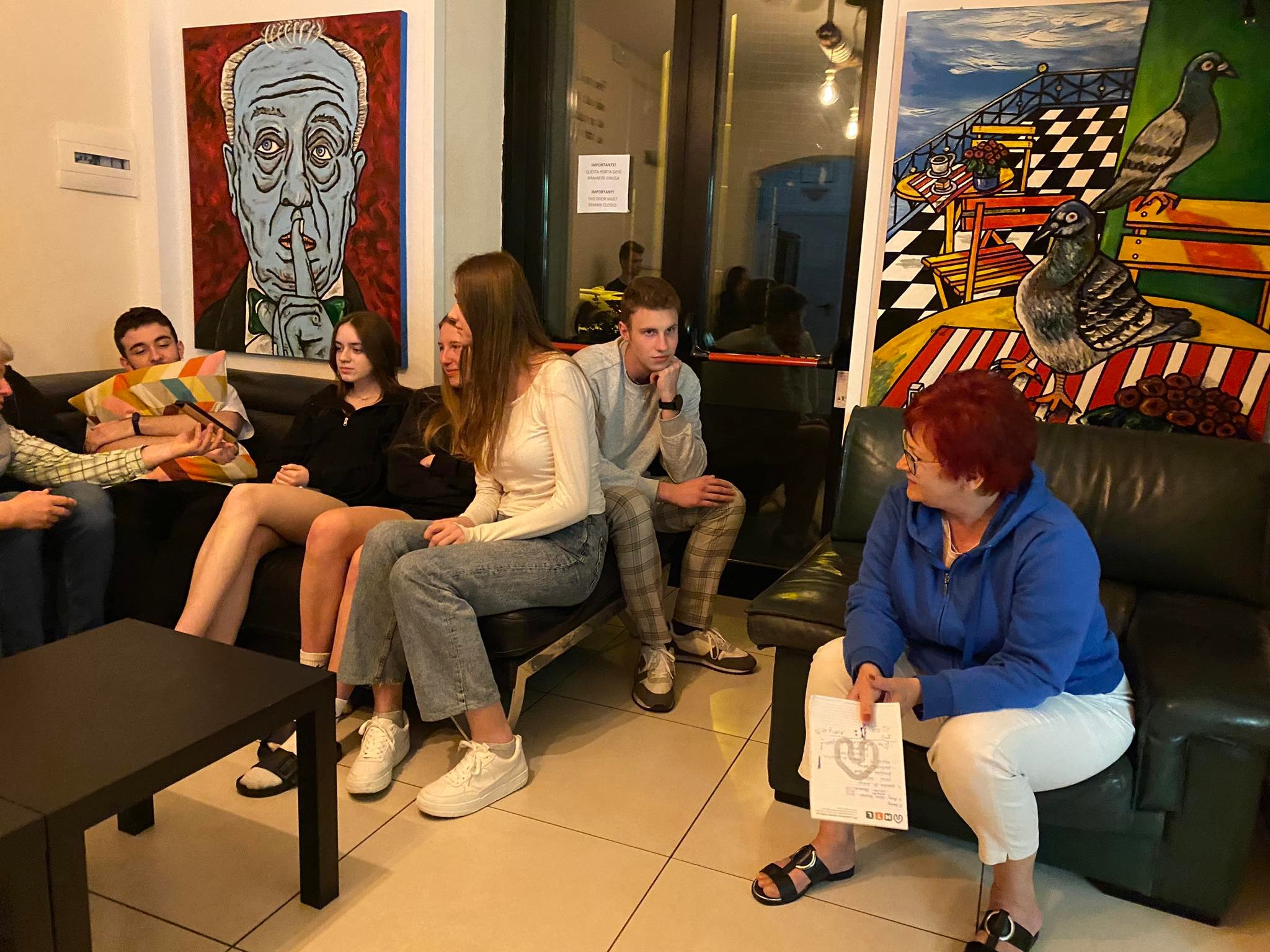
We have been living in Rimini for two weeks, in two hotels, but in the evenings, after a late dinner, when everyone returns from work, we meet in the Dolce Vita hotel lobby and play various games, talk, and discuss excursion plans. It’s a good occasion for integration.






Article written by the Participants of the ZSP project in Krosno Odrzańskie.