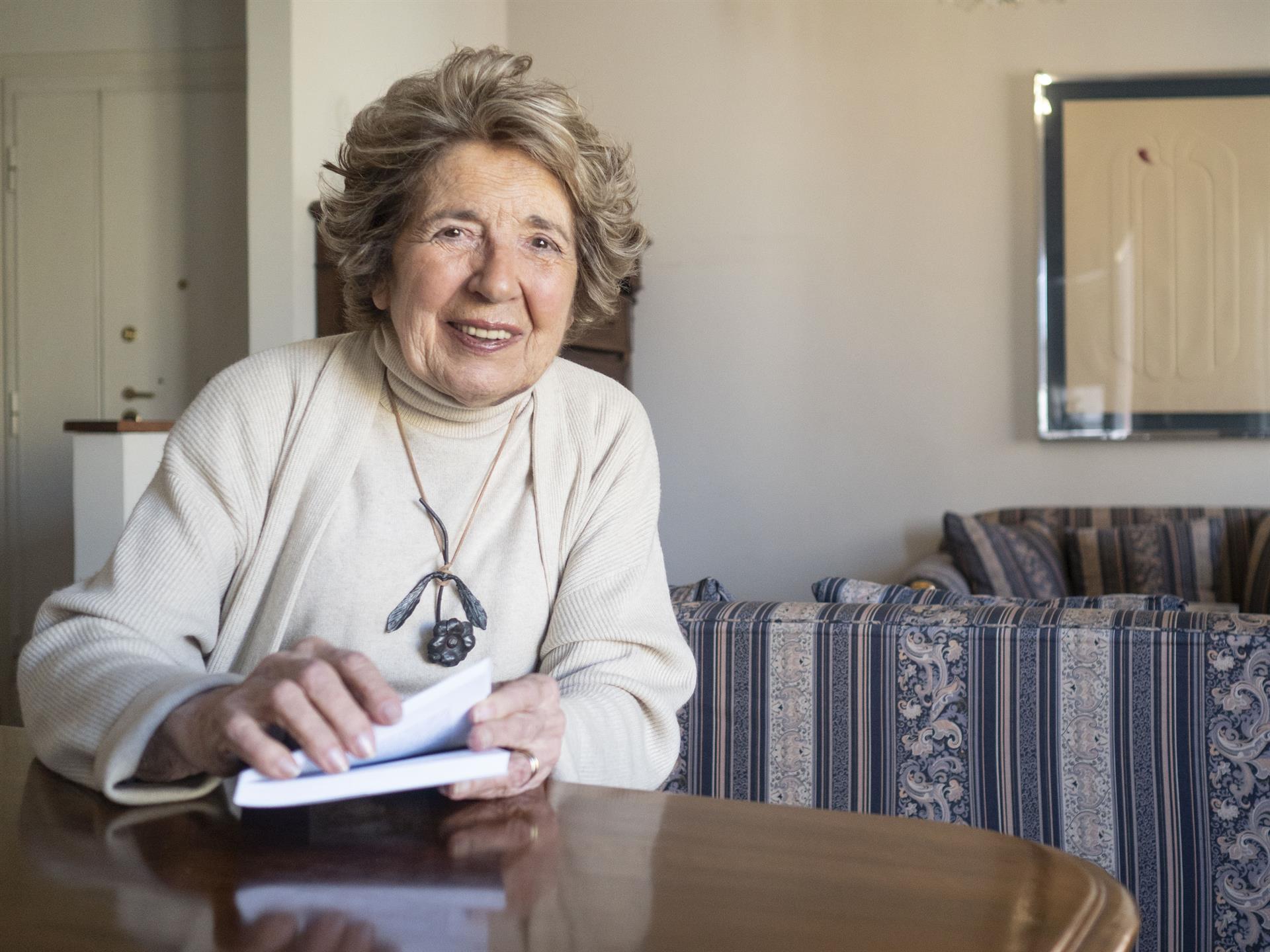
1987: the European Union does not exist yet, the Berlin Wall is still standing and the single currency represents a distant mirage. Yet students from all over Europe are free to attend university in another country, enjoying the customs and traditions of a culture different from their own.
To fully understand the tenacity and farsightedness that led to the realization of the project, it is necessary to take a step back of almost twenty years, scrolling the timeline until 1958, when the young student from Rome, Sofia Corradi, sees denied by her university the recognition of qualifications obtained after a period of study at Columbia University in New York.
It is precisely from this big disappointment that we must start to tell the origin of the Erasmus Project, the intercultural program that has given millions of young people from all over Europe the opportunity to live an experience of growth in a country other than their own
Born in 1934, Sofia Corradi immediately learned what it means to be citizens of the world, thanks to two cosmopolitan parents who convey to her an unstoppable thirst for knowledge.
The real opportunity to become a citizen of the world occurred in 1957, when Sofia, enrolled in the 4th year of the Law Faculty of the La Sapienza University of Rome, had the opportunity to spend a year of study in the United States, winning the prestigious Fulbright Scholarship at the most important American universities.
In New York she attends a master’s degree in comparative university legislation at Columbia University, one of the most prestigious universities in the world, but above all she has the opportunity to make life experiences unthinkable for a girl of the 1950
At the end of the summer of 1958, Sofia returns home, with a different way to look at the world. But an injustice is about to occur.
“Why should we give you a degree if you spend your time travelling around the world? This was the reply of a zealous clerk of the University to her request to validate the exams done in America.
The life experience thus
turns into one of the worst humiliations of her life.
But Sofia does not lose heart. With pride and determination she passes the 3
exams she misses in her degree and 8 months later she obtains the title of
“Doctor of Law”.
However, she soon realizes that the experience of an academic year abroad was not in vain. She starts receiving job offers from companies and law firms, but chooses to stay in the university environment to fulfill a precious mission: to ensure that everyone can have the opportunity to make a study trip abroad like the one she did. Years go by, but her dream is still alive.
In the seventies she becomes a professor of Educational Sciences, but while United Europe is still a distant concept, Sofia continues to imagine the free movement of European students. For years she has been gathering ideas to try to create a favorable culture in terms of student mobility to be spread among professors and principals, but she only comes up against an insurmountable wall of bureaucracy and prejudices that is difficult to break down.
She fights for eighteen years before winning her battle, but in 1987 her idea finally comes true. It it the birth of The Erasmus Program, an acronym for “European Action for the Mobility of University Students” which, by a fortunate coincidence, recalls the name of that illustrious Dutch philosopher who, between the fifteenth and sixteenth centuries, traveled the route of the main European cities of the era, animated by a thirst for knowledge…Erasmus, in fact.
Since that distant 1987, more than 5 million
students have traveled to European universities, contributing to the creation
of a Europe of peoples.
Over the years, as an extraordinary tool for promoting European citizenship,
Erasmus has brought young people closer to the concept of Europe, seen as an
intercultural space of sharing and debate.
Since then, Sofia Corradi has been known by all as “Mother Erasmus”, a gentle nickname that honors her commitment to creating an intercultural model of study and life that is a stimulus and motivation for the curious citizens of the Europe of the future.
In 2014 the Erasmus Project was extended and refinanced as Erasmus Plus, the new transnational mobility program that expanded the boundaries of the predecessor project, also involving the working and entrepreneurial dimension of its participants.
The dedication with which “Mamma Erasmus” led her battle for years was rewarded in May 2016, when Sofia Corradi was awarded the prestigious “Carlo V” prize, an award assigned by the “European Academy of the Yuste Foundation” which includes among its winners Michail Gorbachev, Nobel Peace Prize winner, and Simone Veil, the first woman to hold the position of President of the European Parliament. A few months later, she receives from the President of the Republic the honor of Commander of Merit of the Republic.
“An anger and humiliation:
this is the genesis of Erasmus. I promised myself that no other student would
have to suffer an offense like the one I had suffered. ”
She has honored her promise.